Aruba Sun Safety: UV Index, Shade, and Burn Prevention
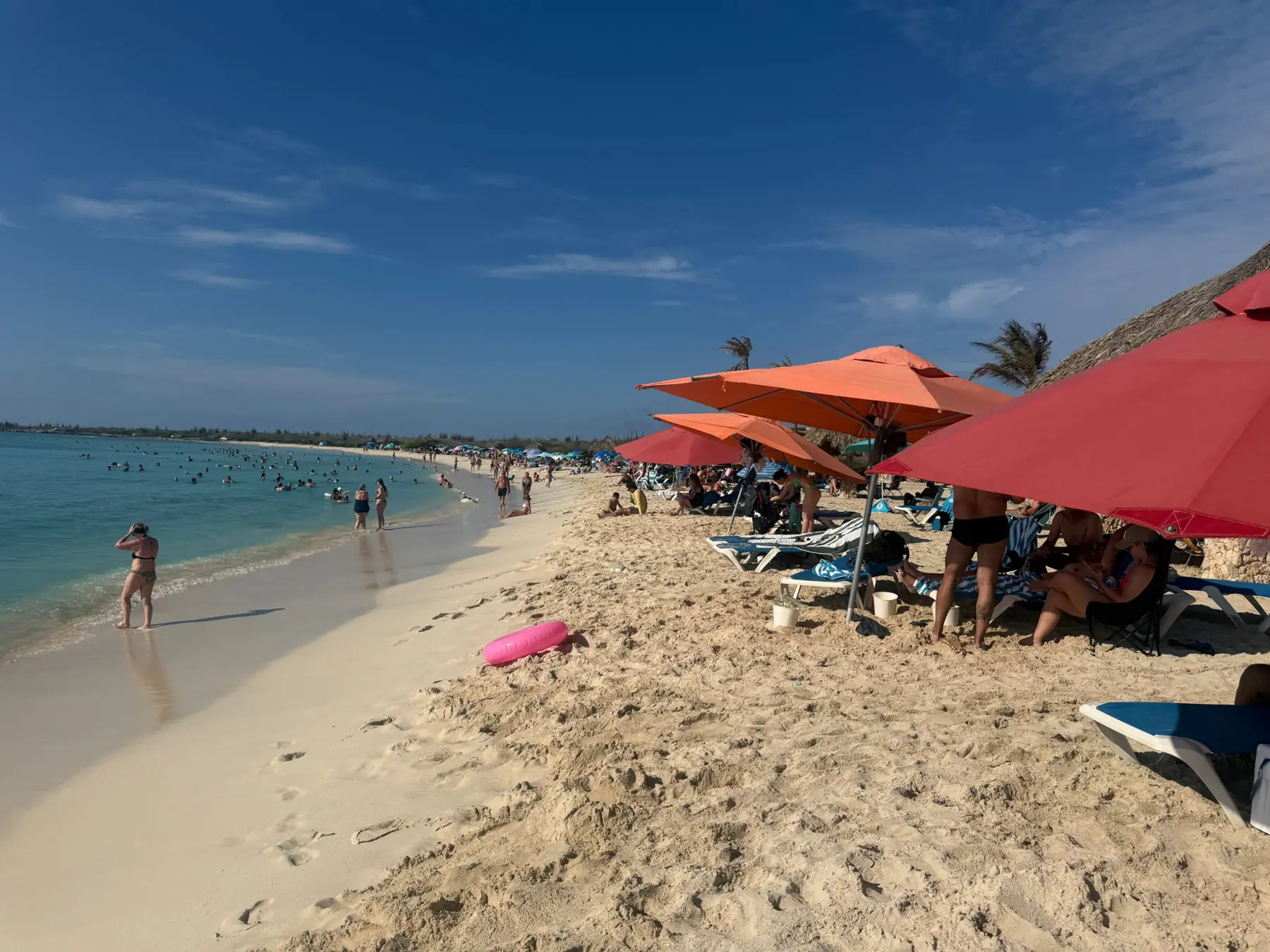
The sun in Aruba is stronger than most visitors expect, and the wind makes it easy to miss. A bad burn on day one can ruin the rest of the trip, so it is worth getting this right from the start.
How strong is the sun?
NomadSeason, using Copernicus data, shows monthly peak UV Index values for Oranjestad between 10 in December and 14 in March and April. The World Health Organization puts a UV Index of 8 and above in its highest category and says to avoid being outside during midday hours, seek shade, and use all protection. So even Aruba's lowest monthly peak is at that level.
When to be careful
WHO says UV levels peak during the four hours around solar noon. In Aruba that means late morning through early afternoon. Plan your longest swims early, and be under cover for the middle of the day. UV also gets through clouds, according to VisitAruba and the CDC, so an overcast sky does not change the plan.
Book your shade before you fly
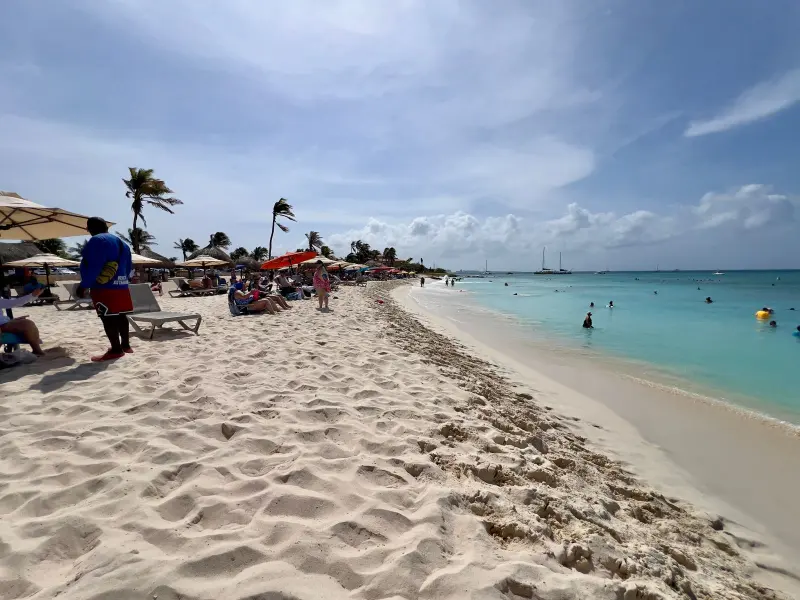
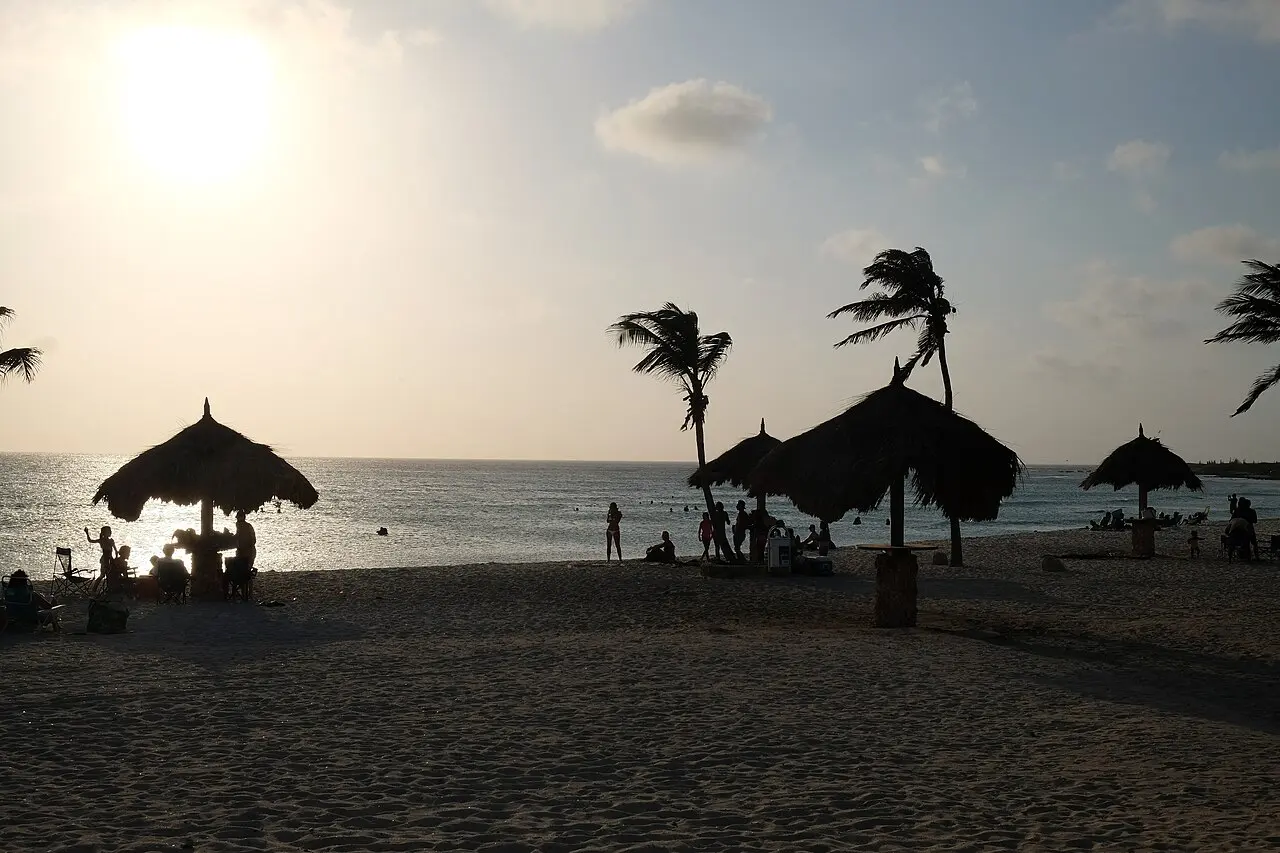
One big umbrella and two beach chairs at Arashi Beach, held under your name. $120.00 a day, all in.
Book your setShade helps, but it is only part of it
The CDC says to stay under an umbrella, tree, or other shelter, and to keep using sunscreen and clothing as well. VisitAruba points out that white sand and seawater reflect a lot of sunlight, so you can get significant exposure even under an umbrella. Your feet and shins, which stick out from the shade, are the classic burn spots.
Sunscreen that works
- Use a broad-spectrum sunscreen. VisitAruba recommends SPF 30 or higher.
- Choose oxybenzone-free. Aruba banned its import and sale, and the tourism office recommends mineral sunscreen.
- Apply a thick layer before you go outside. Get help with your back.
- Reapply after about 2 hours, and after swimming, sweating, or toweling off, even if the label says waterproof.
- Check the expiration date. The CDC says heat shortens shelf life.
Clothing and gear
- A hat with a brim all the way around. Baseball caps leave ears and neck exposed.
- Sunglasses that block UVA and UVB.
- A swim shirt for snorkeling. Your back is the most exposed part of your body when you float face down.
Heat and hydration
The tourism office warns that the heat can cause dehydration and that trade winds can make overheating hard to notice. Bring a full reusable bottle or two. Aruba's tap water is safe to drink. Take breaks in the shade before you feel you need them.
Babies and small children
The CDC does not recommend sunscreen for babies 6 months old or younger. The American Academy of Pediatrics says to keep them in shade with light, covering clothing and a brimmed hat, and to use sunscreen on small areas only if shade and clothing are not available. If a baby under 1 year gets sunburned, the AAP says to call the doctor right away.
If you burn anyway
Get out of the sun. Drink water. VisitAruba says aloe helps keep burned skin moist and eases discomfort. Aloe is an Aruban product and is sold widely on the island. Seek medical attention for a severe burn, blisters, fever, or dizziness.
Plan your day around shade
The easiest way to protect yourself is to have a place to retreat to all day. Our set at Arashi Beach includes one big umbrella and two beach chairs, set up and anchored before you arrive. It is held under your name from 9:00 AM to 5:00 PM, so you can swim, come back, and cool off as often as you need. The price is $120.00 per set per day, all in.
Curious about the beach itself? Read our Arashi Beach guide. Book your set at least 24 hours ahead and you will get confirmation right away with a map.
Source: NomadSeason: UV Index in Oranjestad, WHO: The UV Index, Aruba.com: Is Aruba Safe, VisitAruba: Tanning Advice, CDC: Sun Safety, HealthyChildren.org: Sun Safety, VisitAruba: Plastics and Oxybenzone Ban. Conditions change, so check on the day.
 Book your set: $120 a day